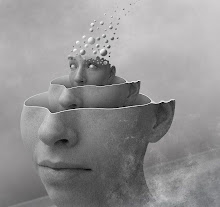
In his famous essay, “The Subjection of Women,” John Stuart Mill argues that the “nature of women is an eminently artificial thing – the result of forced repression in some directions, unnatural stimulation in others” (128). Femininity is a result of social constructions and fixed roles; this is especially clear in most 19th century Victorian poetry and prose. While reading Elizabeth Barrett Browning's poem, "The Runaway Slave at Pilgrim's Point," for another course, thoughts about the construction and deconstruction of femininity came to mind. While the poem is often read as a response to and support of the anti-slavery movement of the time, it is also a response to female subjection. What differentiates this poem from other feminist works is the fact that it presents oppression in threefold: the speaker is not just repressed because she is female, but she is also a black slave. Hence, Barrett Browning offers a space for the discussion of femininity in terms of class, race, and sex. The most significant issue in terms of femininity, however, is the speaker’s role as a mother.
As mothers, women are seen as “bearers of value” (Irigaray 802). A mother’s role is to instill values into future generations; to do so, they must reinforce customary traditions, and in this case, white supremacy and patriarchal dominance, by raising their children to maintain social order. In fact, her responsibility “is to maintain the social order without intervening” (807). In other words, she is to raise her children to carry on the traditional customs of the culture. By ingraining these suppressing notions into their children, the mother is involved in continuing the cyclical process of unfair class order and treatment. The subjection of women is common during the time the poem was written, so the departure from this universal custom “quite naturally appears unnatural” (Mill 125). Nevertheless, the speaker in the poem is able to depart from this traditional concept of motherhood in the most radical way possible: infanticide. In this case, however, killing her child is not necessarily seen as “unnatural;” rather, it is an empowering act since it represents the destruction of fixed roles and female repression. The speaker’s violent act in killing the baby she had by her white master illustrates Barrett Browning’s attempt at deconstructing femininity. By strangling her baby, the speaker is expressing her frustration with her role as a female slave, and in this violent act, she is able to free herself from the constraints placed upon her by a world dominated by white males.
In many ways, the speaker’s story relates to the story of Lilith in Hebrew mythology. “Created not from Adam’s rib but, like him, from the dust, Lilith was Adam’s first wife,” according to “apocryphal Jewish lore. Because she considered herself his equal, she objected to lying beneath him, so that when he tried to force her submission, she became enraged” (Gilbert and Gubar 823). In a similar vain, the speaker in “The Runaway Slave at Pilgrim’s Point,” becomes enraged at the thought of submissively continuing to live as a subordinate member of society. The similarities between Lilith and the speaker do not end at their refusal to carry on as lesser beings among society. Lilith “flew away to the edge of the Red Sea to reside with demons,” and “Threatened by God’s angelic emissaries, told that she must return or daily lose a hundred of her demon children to death, Lilith preferred punishment to patriarchal marriage” (823). She then “took revenge against both God and Adam by injuring babies” (823). Aside from the obvious connection of injuring and killing their babies, Lilith and the speaker in the poem both represent “the price women have been told they must pay for attempting to define themselves” (823). In both of these instances, the price involves killing their own children.
In “The Madwoman in the Attic,” critics Sandra Gilbert and Susan Gubar classify Lilith as the “monster-woman” since she is far removed from the “angel in the house” phenomenon. Although the speaker in the poem could certainly be classified as the “monster-woman” because she kills her child, she differs from Lilith in the sense that the killing of her own child does not bring her more suffering. I maintain that the speaker’s situation differs from that of women who do not experience oppression in several different contexts. Unlike the speaker, Lilith was not included in racial minority, nor was she a slave. Hence, when Gilbert and Gubar claim that the killing of their own children brings “more suffering” to women, it does not necessarily ring true for the speaker in “The Runaway Slave at Pilgrim’s Point.” For the speaker, the killing of her child, to some degree, actually offers freedom.
Elizabeth Barrett Browning is able to deconstruct the concept of femininity in “The Runaway Slave at Pilgrim’s Point” by presenting a character who escapes perhaps the most oppressing notion of the female role: motherhood. In fact, she does so by killing her own baby, an act far removed from the traditional concept of the female. This deconstruction is made possible because the infanticide is performed by a woman who experiences the restraints of femininity in three ways: race, class, and of course, sex. Since her oppression is multiplied, this violent act is not deemed as demonic; instead, it is an empowering move aimed to escape the suppressing role of her life as a black female slave.
Works Cited
Barrett Browning, Elizabeth. “The Runaway Slave at Pilgrim’s Point.” The Norton
Anthology of English Literature: The Victorian Age. 8th ed. Ed. Carol T. Christ and Catherine Robson. Vol. E. New York: W.W. Norton & Company, 2006. 1085-92. Print.
Gilbert, Sandra and Susan Gubar. “The Madwoman in the Attic.” Rivkin and Ryan 812-26.
Irigaray, Luce. “Women on the Market.” Rivkin and Ryan 799-812.
Mill, John Stuart. “The Subjection of Women.” Victorian Prose: An Anthology. Ed. Rosemary J. Mundhenk and LuAnn McCracken Fletcher. New York: Columbia University Press, 1999. 121-31. Print.
Rivkin, Julie and Michael Ryan, eds. Literary Theory: An Anthology. 2nd ed. Malden: Blackwell Publishing, 2004. Print.
Tuesday, April 20, 2010

Thursday, April 15, 2010
The Angel in the Attic; The Madwoman in the House
“…the monster-woman, threatening to replace her angelic sister, embodies intransigent female autonomy” (Gilbert and Gubar 819)
How does one begin a discussion about something as complex as feminism? How about a controversial video by Madonna?
While there are many issues to explore in this video, I will focus on the relationship between the old lady and Madonna and the ambiguous crash in the final scene.
First, I’d like to point out that there are only 3 women portrayed in this video: the old lady, Madonna, and the waitress. Next to the old lady and the chubby waitress, Madonna becomes the most beautiful character in the video. This is significant because in this context, she represents the ideals of beauty in popular culture. Throughout each scene, she violently deconstructs all the notions that have repressed her as a female. She is in effect becoming the antithesis of the “angel in the house.”
To understand the significance of the old lady in the video, it is important to consider what she represents. Upon close examination, it becomes clear that the old lady is solely dependent on Madonna. She is only there for the ride; thus, she represents the traditional notion of the female as the “angel in the house.” In 1865 John Ruskin affirmed that the “woman’s power is not for rule, not for battle, and her intellect is not for invention or creation, but for sweet orderings of domesticity” (816). Clearly, then, Madonna takes on the opposite role, destroying these oppressing ideas one at a time. To escape or protest suppression, “Women must kill the aesthetic ideal through which they themselves have been ‘killed’” (812). So why does Madonna bring this poor old lady for this violent ride?
I argue that the old lady’s participation (albeit not actively) is crucial since she is the representation of female oppression. Madonna wants, perhaps even needs her to witness this destruction. After she crashes into the car with the 3 men, Madonna even takes a moment to make sure the old lady’s glasses are securely placed over her eyes, clearly illustrating the importance for the old lady to see what is happening. She does not want her to be blinded by a patriarchal society anymore.
Madonna’s aggressive and brutal behavior places her in the “monster-woman” category. If the traditional representation of the ideal woman has been the “angel in the house,” then “the mysterious power of the character who refuses to stay in her textually ordained ‘place’ [generates] a story that ‘gets away’” from the creators (819). In this video, Madonna is this mysterious power. The most vital part of this is that she places herself in that position; she is able to escape the “angel in the house” phenomenon by stepping out of the predictable, expected, and traditional role of the passive female.
Now, let’s consider the ambiguous ending of the video. I will argue that there are at least two different ways to analyze the ending. One is to argue that the deadly crash at the end implies the death of the “monster-woman.” Some people may say that this rebellious new role for woman is unattainable, and that the crash represents the impossibility for women to escape their traditional roles.
Another analysis, and one that I will argue is more powerful, is that the deadly crash is the final act of empowerment for Madonna. It is not clear whether Madonna or the old lady die, but I wonder whether that’s important, anyway. The key point here is that Madonna was able to give this traditionally repressed old lady (who represents the everywoman) her last hurrah. In fact, she assists in her death by euthanasia.
The old woman represents someone who is considered useless in our society and Madonna helps her end her life. Because Madonna is in the car herself, however, this act is subversive. Does this suggest that Madonna, the “monster-woman,” and the old lady, “the angel in the house,” are in fact the same person? Are they simply different versions of the same self?
Finally, I want to discuss the actual crash itself. It is especially important to note how the car crashes. The car crashes into a pole – why is this important? The pole could be viewed as a phallic symbol; in this case, then, Madonna actively destroys the symbol of patriarchy. Hence, the crash is not the death of female empowerment, but the beginning of it.
Works Cited:
Gilbert, Sanda and Susan Gubar. "The Madwoman in the Attic." Literary Theory: An Anthology. 2nd ed. Ed. Julie Rivkin and Michael Ryan. Malden, MA: Blackwell Publishing, 2004.
812-25. Print.
How does one begin a discussion about something as complex as feminism? How about a controversial video by Madonna?
While there are many issues to explore in this video, I will focus on the relationship between the old lady and Madonna and the ambiguous crash in the final scene.
First, I’d like to point out that there are only 3 women portrayed in this video: the old lady, Madonna, and the waitress. Next to the old lady and the chubby waitress, Madonna becomes the most beautiful character in the video. This is significant because in this context, she represents the ideals of beauty in popular culture. Throughout each scene, she violently deconstructs all the notions that have repressed her as a female. She is in effect becoming the antithesis of the “angel in the house.”
To understand the significance of the old lady in the video, it is important to consider what she represents. Upon close examination, it becomes clear that the old lady is solely dependent on Madonna. She is only there for the ride; thus, she represents the traditional notion of the female as the “angel in the house.” In 1865 John Ruskin affirmed that the “woman’s power is not for rule, not for battle, and her intellect is not for invention or creation, but for sweet orderings of domesticity” (816). Clearly, then, Madonna takes on the opposite role, destroying these oppressing ideas one at a time. To escape or protest suppression, “Women must kill the aesthetic ideal through which they themselves have been ‘killed’” (812). So why does Madonna bring this poor old lady for this violent ride?
I argue that the old lady’s participation (albeit not actively) is crucial since she is the representation of female oppression. Madonna wants, perhaps even needs her to witness this destruction. After she crashes into the car with the 3 men, Madonna even takes a moment to make sure the old lady’s glasses are securely placed over her eyes, clearly illustrating the importance for the old lady to see what is happening. She does not want her to be blinded by a patriarchal society anymore.
Madonna’s aggressive and brutal behavior places her in the “monster-woman” category. If the traditional representation of the ideal woman has been the “angel in the house,” then “the mysterious power of the character who refuses to stay in her textually ordained ‘place’ [generates] a story that ‘gets away’” from the creators (819). In this video, Madonna is this mysterious power. The most vital part of this is that she places herself in that position; she is able to escape the “angel in the house” phenomenon by stepping out of the predictable, expected, and traditional role of the passive female.
Now, let’s consider the ambiguous ending of the video. I will argue that there are at least two different ways to analyze the ending. One is to argue that the deadly crash at the end implies the death of the “monster-woman.” Some people may say that this rebellious new role for woman is unattainable, and that the crash represents the impossibility for women to escape their traditional roles.
Another analysis, and one that I will argue is more powerful, is that the deadly crash is the final act of empowerment for Madonna. It is not clear whether Madonna or the old lady die, but I wonder whether that’s important, anyway. The key point here is that Madonna was able to give this traditionally repressed old lady (who represents the everywoman) her last hurrah. In fact, she assists in her death by euthanasia.
The old woman represents someone who is considered useless in our society and Madonna helps her end her life. Because Madonna is in the car herself, however, this act is subversive. Does this suggest that Madonna, the “monster-woman,” and the old lady, “the angel in the house,” are in fact the same person? Are they simply different versions of the same self?
Finally, I want to discuss the actual crash itself. It is especially important to note how the car crashes. The car crashes into a pole – why is this important? The pole could be viewed as a phallic symbol; in this case, then, Madonna actively destroys the symbol of patriarchy. Hence, the crash is not the death of female empowerment, but the beginning of it.
Works Cited:
Gilbert, Sanda and Susan Gubar. "The Madwoman in the Attic." Literary Theory: An Anthology. 2nd ed. Ed. Julie Rivkin and Michael Ryan. Malden, MA: Blackwell Publishing, 2004.
812-25. Print.
Wednesday, April 7, 2010
The American (Dystopian) Dream
“No matter how poor a man was, or how much he suffered, he could never be really unhappy while he knew of that future; even if he did not live to see it himself, his children would..." (Sinclair 357)
Of all the themes, symbols, and ideologies presented in Upton Sinclair’s The Jungle, the one that stuck out most to me was “The American Dream.” Maybe it’s because I, too, come from a family of immigrants who came to the United States with a few dollars and big dreams; or maybe it's because of all the success stories I’ve heard, and all the failures too. Perhaps still it is because this dream never seems to die in America. For people living in developing countries around the world, America is a symbol of freedom and opportunity, but we’ve all heard this before. Jurgis’ family came to America in the hopes of attaining this dream only to realize that it is merely an illusion – a utopia created in the minds of the optimists, hoping for something better in the world. For the less affluent population, the American dream is more often than not, merely a distant and unattainable fantasy.
It’s funny (not “haha” funny, but funny in the ironic sense) that the problems with capitalism presented in this book are still very much relevant and problematic today as they were in 1906, when the book was published. America remains a capitalistic nation, divided by class, where the rich remain rich and the poor remain poor. Of course, there are some “rags to riches” success stories, but for most, the American Dream will always remain a dream. Why is this? I think it is safe to assume that economic statuses in this country are cyclical, meaning they replicate generation after generation. If grandpa was rich, then Johnny III will probably be wealthy too. “One major assumption of Marxists is that culture…functions to reproduce the class structure of society,” and “culture,” I maintain, includes the work force (Rivkin, Ryan 644). This is clear in the labor conditions presented in The Jungle, where Jurgis and his family (who represent the “working class”) are faced with greedy bosses and corrupt politicians. How interestingly relevant that seems to politics in 2010.
The most disturbing part in all of this is the fact that the politicians, businessmen, or the otherwise “wealthy” population, use the working class only to get wealthier themselves. They do this by simple manipulation. A good example of this in the book is the advertisements to buy property: “Why not own your own home? Do you know that you can buy one for less than your rent? We have built thousands of homes which are now occupied by happy families” (Sinclair 51). Manipulating the working class by reinforcing the notion of the American Dream is a strategy that’s still being used today and it is not always that people realize “It [is] all robbery, for a poor man” (55).
Works Cited:
Rivkin, Julie and Michael Ryan. "Introduction: Starting with Zero." Literary Theory: An Anthology. 2nd ed. Ed. Julie Rivkin and Michael Ryan. Malden, MA: Blackwell Publishing, 1998. 643-46. Print.
Sinclair, Upton. The Jungle. New York: Barnes & Noble Books, 2003. Print.
Friday, March 19, 2010
Midterm
Andzhela Keshishyan
Dr. Steven Wexler
English 638
March 19, 2010
Gallop, Jane. “Lacan’s ‘Mirror Stage:’ Where to Begin.” SubStance 11.4.37-8 (1983):118-28. JSTOR. Web. 7 March 2010.
The focus of the “self” that is presented in this article will prove to be a helpful source in analyzing and understanding Lacan’s “mirror stage.” Gallop makes the distinction between the inside and the outside, and relates this to the mirror – the mirror stage, thus, becomes a turning point between the “self” and the projected self. This argument will be useful in analyzing Alan’s behavior in Equus.
Garber, D. L. “The Surprising Thing about Lacan.” Literature and Psychology 44.1-2(1998): 54-69. WilsonWeb. Web. 7 March 2010.
Garber claims in this article that Lacan’s work cannot be independent from Freud’s and vice versa. He insists that the two cannot be easily separable, and devotes the argument to comparisons between the two theorists. For instance, there is a fascinating comparison in the difference between Lacan and Freud’s ideas about the primal moment of the “mirror stage.” This, I believe, will be helpful to anyone writing about this important moment and its connection with desire, freedom, and the self.
Pelt, Van Tamise. “Lacan in Context: An Introduction to Lacan for the English-Speaking Reader.” College Literature 24.2 (1997): 57-70. JSTOR. Web. 7 March 2010.
This article puts Lacan’s work in context with the historical moment. Pelt offers a good way for readers to see Lacan’s work in a more holistic manner, which in turn provides for a deeper understanding. Since most of Lacan’s works are translations, this article is a good background for the English-speaker to fully grasp all of the background moments which contribute to Lacan’s theories.
Simon, John. “Hippodrama at the Psychodrome.” The Hudson Review 28.1 (1975):97-106. JSTOR. Web. 25 February 2010.
In this article, John Simon discusses Peter Shaffer’s Equus. He addresses the play in terms of homosexuality and psychoanalysis. There is an outline of the failed heterosexual relationships presented in the play, and how this furthers the notion of it as homosexually based. Most useful for my purposes, however, is the discussion of the horses eyes as a substitute throughout the play. For a paper focused on Lacan’s mirror stage, this particular part in the article will prove to
be quite useful.
Vasseleu, Cathryn. “The Face before the Mirror-Stage.” Hypatia 6. 3 (1991): 14-55.JSTOR. Web. 7 March 2010.
This article addressing Lacan’s mirror-stage is an important one, as it discusses the reflected image as an object. The topics of self-origin, psyche, and repression, which the author addresses, are useful for an argument based on Peter Saffer’s Equus (in comparing the horse’s eyes as mirrors for the main character, Alan).
Wright, Elizabeth. “Another Look at Lacan and Literary Criticism.” New Literary History 19.3 (1988): 617-27. JSTOR. Web. 7 March 2010.
The relevance of this article rests on the discussion of Lacan’s notion of the signifier and the signified. In this argument, Wright relates the inner private experience of the body to the outer public interpretation of it. This makes for a unique relation to Alan’s (the protagonist in Equus) grisly act in terms of his inner experience and the interpretation of it by the outside world.
Dr. Steven Wexler
English 638
March 19, 2010
Seeing Through the Horse’s Eyes
Peter Shaffer’s dramatic play Equus is layered with psychoanalytic theories. From the relationship between Dysart (a psychiatrist) and Alan (the teenage patient who has blinded six horses), to the idea of sexual repression, the play is full of questions. Although there has been some scholarship focused on the most important moment in the play – the blinding of the horses and its relationship to Jacques Lacan’s “mirror stage,” there has not been a sufficient study of this theory in terms of Alan’s sexuality within the play. If the mirror-stage can be defined as a “turning point in the chronology of a self,” as Jane Gallop has suggested, then the horses’ eyes symbolize this essential moment in Alan’s life (121). They act as a mirror for Alan, allowing him to see his “whole” self as opposed to the fragmented self defined by society. In this image, Alan recognizes his homosexuality and realizes that it has been oppressed by the traditional, heterosexual world surrounding him. Dysart symbolizes the control society has over the “other.” The “other” in this case is Alan, or more specifically, his sexuality, since homosexuality is perceived as a threat to the heterosexual norm. Dysart, however, complicates the notion of “control” as he begins to question his role in “normalizing” Alan. Despite his hesitance, however, he still conforms to the duties of his job, and tries to help Alan conform as well. But the violent acts of blinding the horses symbolize Alan’s frustration with conformity, and in this act, he destroys society’s control over his sexuality, and more extensively, the control over his true self. The “mirror-stage” plays a crucial role in this destruction, and I argue that it is only in this moment of chaos where Alan finally feels free and can be his whole self (as opposed to the hole he feels in himself prior to this moment).
Peter Shaffer’s dramatic play Equus is layered with psychoanalytic theories. From the relationship between Dysart (a psychiatrist) and Alan (the teenage patient who has blinded six horses), to the idea of sexual repression, the play is full of questions. Although there has been some scholarship focused on the most important moment in the play – the blinding of the horses and its relationship to Jacques Lacan’s “mirror stage,” there has not been a sufficient study of this theory in terms of Alan’s sexuality within the play. If the mirror-stage can be defined as a “turning point in the chronology of a self,” as Jane Gallop has suggested, then the horses’ eyes symbolize this essential moment in Alan’s life (121). They act as a mirror for Alan, allowing him to see his “whole” self as opposed to the fragmented self defined by society. In this image, Alan recognizes his homosexuality and realizes that it has been oppressed by the traditional, heterosexual world surrounding him. Dysart symbolizes the control society has over the “other.” The “other” in this case is Alan, or more specifically, his sexuality, since homosexuality is perceived as a threat to the heterosexual norm. Dysart, however, complicates the notion of “control” as he begins to question his role in “normalizing” Alan. Despite his hesitance, however, he still conforms to the duties of his job, and tries to help Alan conform as well. But the violent acts of blinding the horses symbolize Alan’s frustration with conformity, and in this act, he destroys society’s control over his sexuality, and more extensively, the control over his true self. The “mirror-stage” plays a crucial role in this destruction, and I argue that it is only in this moment of chaos where Alan finally feels free and can be his whole self (as opposed to the hole he feels in himself prior to this moment).
Before the idea of the horses’ eyes as mirrors can be explained, it is important to understand society’s role in ingraining the mind with traditional concepts and its harsh judgment over anything that differs. In terms of sexuality, anything outside of the heterosexual norm is regarded as sinful and disgraceful. When Dysart asks Alan’s parents what they have taught him about sexuality, his mother replies: “I told him the biological facts. But I also told him what I believed” (Shaffer 29). This statement reinforces the role of the family in influencing (and controlling) the sexuality of future generations. Mrs. Strang (Alan’s mother), ends her explanation with “I simply…I don’t understand…Alan!” and then breaks down in sobs (29). Mrs. Strang is very religious, which makes the acceptance of homosexuality, for instance, nearly impossible. The implication here is that Mrs. Strang speculates, or possibly is aware of her son’s sexuality; her sobbing represents the response from the norm, who regard homosexuality as unacceptable. It is no wonder, then, that Alan is uncomfortable with expressing his true sexual orientation.
Since “coming out of the closet” is an entrance into a life of harassment and judgment by society, Alan tries to conform to “normalcy.” In his attempt to stay “normal” (i.e., heterosexual), “He has become a gendered subject, surmounting his Oedipus complex; but in doing so he has, so to speak, driven his forbidden desire underground, repressed it into the place we call the unconscious” (Eagleton 134). Before the connection with the horses, Alan is in a stage that precedes the mirror stage, where his identity is merely a “projection or a reflection” of society’s expectations; before his release, he has not recognized this suppression because “there is nothing on the other side of the mirror” yet (Gallop 121). Before seeing himself in the horses’ eyes, Alan is not the subject of himself; rather, he is only an object constructed by unquestioned rules and expectations from others.
The first moment of self-recognition for Alan occurs at the age of six when he is at the beach with his family. While building sandcastles, Alan meets a horseman who allows him to stroke and then sit on the horse. Alan rides the horse faster and faster, feeling an increasing sense of freedom while doing so. This scenario can be regarded as the moment that Alan recognizes his homosexuality. When his parents see him riding the horse, they are shocked and frightened. They tell Alan to come down from the horse, but he refuses, shouting “NO…NO!” (Shaffer 35). Here, at the somewhat less constructed age of six, Alan shows a rebellious side by refusing to listen to the voice of authority in his life: his father. Mr. Strang, obviously frustrated, tells the horseman, “How dare you pick up children and put them on dangerous animals” (36). When the Horseman expresses surprise over the word “dangerous,” Mr. Strang replies, “Of course dangerous, Look at his eyes. They’re rolling” (36). This notion of the rolling eyes and the horse as a “dangerous” animal reflects Mr. Strang’s fear for his son to enter a different path – one in which he would have no control over. Besides the threat of control, the horse symbolizes Alan’s suppression, and Mr. Strang’s fear is that he will recognize this and respond to it (which he does). Alan’s relationship with his father is ruined after this incident, and “it must be remembered [that] hatred or contempt of the father is a classic homosexual pattern” (Simon 99).
In a session where Alan recalls this first meeting with the horse, he tells Dysart: “When the horse first appeared, I looked up into his mouth. It was huge. There was this chain in it” (43). The chain in the horse’s mouth, of course, represents control, suppression, and silencing. This has left a lasting impression on Alan because he recognizes himself in the horse. The horse is Alan. They are both controlled by another, silenced, and held in constraint, with no way to escape and run free. Alan’s taste of freedom occurs when he rides the horse; in this scene, he is no longer repressed, and his desires are met, if only for a moment. This feeling does not last. Coming down from the horse means conformity. It means that Alan’s desires are now repressed again.
Working at the stables years later allows Alan to reunite with horses – which symbolize both his oppression and yearning for escape. His secret outings with the horses after work hours suggest his gradual attempt to understand and accept himself. In looking into the horse’s eyes, he sees his true self. This moment of mirroring “is a decisive moment” since it “is the source of not only for what follows but also for what precedes. It produces the future through anticipation and the past through retroaction” (Gallop 121). This critical moment reminds Alan of the freedom he felt the first time he saw a horse and the years of repression he has felt since. This chaotic moment offers freedom since it allows him to feel that initial sense of escape. Freud frequently talks about this “primal moment we are driven to return” as “static, inorganic, and inanimate;” Lacan, conversely, “focuses on the way it is also dynamic and even chaotic in order to construct a freedom grounded on that chaos” (Garber). The horses’ eyes do not refuse desire. Even though this freedom is temporary (and anything that’s temporary is also repressed), “it also creates freedom by being the authentic world we inhabit” (Garber). The world which is seen in the horses’ eyes is Alan’s authentic world, for it is the only place he can be himself without worrying about the outside influences and controlling elements surrounding him.
Years of repression lead Alan to commit an act of unthinkable violence towards the very thing that offered him freedom to begin with. Freud would have a field day with this. He would argue that the blinding of the horses is a form of psychological regression, and he would certainly have a point. It is indeed a form of regression. It is a temporary release and escape to something he has felt before – freedom. Because his desires have been repressed, the act of blinding the horses serves as a way to destroy this repression. Its violent act offers Alan a sense of control over his own life. In blinding the mirrors, he is blinding everything that’s been in the way of his true self: judgments, suppression, familial control, and societal influences. The eyes – mirrors -- provide Alan a medium in which to see things clearly. In this clear image, he is better able to understand what he is, but also, what he has not been allowed to be. Lacan argues that “We have only to understand the mirror stage as an identification, in the full sense that analysis gives to the term: namely, the transformation that takes place in the subject when he assumes an image” (442). For Alan, the horse’s eyes offer a medium for self-identification. In them, he sees the subject of himself; thus, there is finally a correlation between the object and the subject and in this connection, the whole self is revealed.
Because “psychoanalysis is not only a theory of the human mind, but a practice for curing those who are considered mentally ill or disturbed,” it is equally important to discuss Dysart’s role as a psychiatrist (Eagleton 138). His job is to help bring Alan to “normalcy” and a healthy state of mind. Of course, the argument “that psychoanalysis as a medical practice is a form of oppressive social control, labeling individuals and forcing them to conform to an arbitrary definition of ‘normality’” exists (141). It is this very argument that makes Dysart wonder whether his duty as a psychiatrist is really helping Alan. In a powerful passage, Dysart tells Hesther:
[Alan] will be delivered from madness. What then? He’ll feel himself acceptable! What then? Do you think feelings like his can be simply re-attached, like plasters? Stuck on to other objects we select? Look at him! … My desire might be to make this boy an ardent husband – a caring citizen – a worshipper of abstract and unifying God. My achievement, however, is more likely to make a ghost! (Shaffer 108).
Clearly, Dysart questions his role (and thus the role of psychiatrists) in “normalizing” individuals. By “helping” Alan, he is hurting the very essence that makes him who he is. His job, essentially, is to repress Alan’s sexuality. He is to make Alan act “acceptable” within the rules of society, but at what expense? He is killing the very spirit that makes Alan. He is killing the passion that exists within him. He observes, “Passion can be destroyed by a doctor. It cannot be created” (109). Alan’s passion (his sexuality) is a part of him, so by “curing” him, Dysart is figuratively killing Alan.
In terms of psychoanalytic theory, Equus examines the relationship between the mentally ill and the healer of the mentally ill. Both terms and roles are socially constructed, and Peter Shaffer’s play questions these constructions. In addition, Lacan’s mirror-stage provides a way to understand Alan’s actions. The blinding of the horses is much more than the physical act entails; it is the refusal to conform, the frustration to accept a façade, and finally, the destruction of it all. It is an act of escape and an attempt to be free. The mirror-stage lets Alan see the world in a clear, new light. In the reflection of the horse’s eyes, Alan understands his role within society. Instead of accepting it, however, he chooses to destroy it. In the chaotic act of rebellion and violence, Alan feels freedom.
Works Cited
Eagleton, Terry. Literary Theory: An Introduction. 2nd ed. Minneapolis: The University of Minnesota Press, 1996. Print.
Gallop, Jane. “Lacan’s ‘Mirror Stage:’ Where to Begin.” SubStance 11.4 (1983): 118-28. JSTOR. Web. 7 March 2010.
Garber, D. L. “The Surprising Thing About Lacan.” Literature and Psychology 44. 1-2(1998): 54-69. WilsonWeb. Web. 7 March 2010.
Lacan, Jacques. “The Mirror Stage as Formative of the Function of the I.” Literary Theory: An Anthology. 2nd ed. Ed. Julie Rivkin ad Michael Ryan. Malden: Blackwell Publishing, 1998. Print.
Shaffer, Peter. Equus. New York: Scribner, 1973. Print.
Simon, John. “Hippodrama at the Psychodrome.” The Hudson Review 28.1 (Spring 1975):97-106. JSTOR. Web. 16 February. 2010.
Works Cited
Eagleton, Terry. Literary Theory: An Introduction. 2nd ed. Minneapolis: The University of Minnesota Press, 1996. Print.
Gallop, Jane. “Lacan’s ‘Mirror Stage:’ Where to Begin.” SubStance 11.4 (1983): 118-28. JSTOR. Web. 7 March 2010.
Garber, D. L. “The Surprising Thing About Lacan.” Literature and Psychology 44. 1-2(1998): 54-69. WilsonWeb. Web. 7 March 2010.
Lacan, Jacques. “The Mirror Stage as Formative of the Function of the I.” Literary Theory: An Anthology. 2nd ed. Ed. Julie Rivkin ad Michael Ryan. Malden: Blackwell Publishing, 1998. Print.
Shaffer, Peter. Equus. New York: Scribner, 1973. Print.
Simon, John. “Hippodrama at the Psychodrome.” The Hudson Review 28.1 (Spring 1975):97-106. JSTOR. Web. 16 February. 2010.
Annotated Bibliography
The focus of the “self” that is presented in this article will prove to be a helpful source in analyzing and understanding Lacan’s “mirror stage.” Gallop makes the distinction between the inside and the outside, and relates this to the mirror – the mirror stage, thus, becomes a turning point between the “self” and the projected self. This argument will be useful in analyzing Alan’s behavior in Equus.
Garber, D. L. “The Surprising Thing about Lacan.” Literature and Psychology 44.1-2(1998): 54-69. WilsonWeb. Web. 7 March 2010.
Garber claims in this article that Lacan’s work cannot be independent from Freud’s and vice versa. He insists that the two cannot be easily separable, and devotes the argument to comparisons between the two theorists. For instance, there is a fascinating comparison in the difference between Lacan and Freud’s ideas about the primal moment of the “mirror stage.” This, I believe, will be helpful to anyone writing about this important moment and its connection with desire, freedom, and the self.
Pelt, Van Tamise. “Lacan in Context: An Introduction to Lacan for the English-Speaking Reader.” College Literature 24.2 (1997): 57-70. JSTOR. Web. 7 March 2010.
This article puts Lacan’s work in context with the historical moment. Pelt offers a good way for readers to see Lacan’s work in a more holistic manner, which in turn provides for a deeper understanding. Since most of Lacan’s works are translations, this article is a good background for the English-speaker to fully grasp all of the background moments which contribute to Lacan’s theories.
Simon, John. “Hippodrama at the Psychodrome.” The Hudson Review 28.1 (1975):97-106. JSTOR. Web. 25 February 2010.
In this article, John Simon discusses Peter Shaffer’s Equus. He addresses the play in terms of homosexuality and psychoanalysis. There is an outline of the failed heterosexual relationships presented in the play, and how this furthers the notion of it as homosexually based. Most useful for my purposes, however, is the discussion of the horses eyes as a substitute throughout the play. For a paper focused on Lacan’s mirror stage, this particular part in the article will prove to
be quite useful.
Vasseleu, Cathryn. “The Face before the Mirror-Stage.” Hypatia 6. 3 (1991): 14-55.JSTOR. Web. 7 March 2010.
This article addressing Lacan’s mirror-stage is an important one, as it discusses the reflected image as an object. The topics of self-origin, psyche, and repression, which the author addresses, are useful for an argument based on Peter Saffer’s Equus (in comparing the horse’s eyes as mirrors for the main character, Alan).
Wright, Elizabeth. “Another Look at Lacan and Literary Criticism.” New Literary History 19.3 (1988): 617-27. JSTOR. Web. 7 March 2010.
The relevance of this article rests on the discussion of Lacan’s notion of the signifier and the signified. In this argument, Wright relates the inner private experience of the body to the outer public interpretation of it. This makes for a unique relation to Alan’s (the protagonist in Equus) grisly act in terms of his inner experience and the interpretation of it by the outside world.
Thursday, March 18, 2010
Stop! in the name of Marx
“The relationship between the intellectuals and the world of production is not as direct as it is with the fundamental social groups but is, in varying degrees, ‘mediated’ by the whole fabric of society and by the complex of superstructures” (Gramsci 673)
Marx’s explanation of the conflict that exists between the class systems in a society resonates just as much today as it did when it was first written in the 19th century. The proletarians (working class) and the bourgeoisie (middle-class) could be classified as the oppressed and the oppressor. The oppressed, if uneducated and distracted, will not have the opportunity to advance in society. This is where the ideological state apparatus comes in. It works to make us unaware of our exploitations – leading to false class consciousness.
In “Ideology and Ideological State Apparatuses,” Louis Althusser asserts: “Ideology has a material existence” (695). Indeed, it does. Perhaps it is, in some ways, easier to “control” the working class in the 21st century with so many mediums of distraction. The media, for example, is a powerful force used by the ruling class to control the proletarians. The media promotes consumerism to a great extent, coning us into believing that capitalism is fair, which ultimately prevents revolutions. Since rebellions and revolutions would hurt the ruling class, they control these superstructures as a way to protect themselves.
In the film Idiocracy, the “dumbing down” of the masses is exaggerated to point out the negative effects of the media and consumerism. The notion that forms of entertainment are used by the bourgeoisie as a way to control the lower-class is (albeit arguable) an interesting one to ponder.
Works Cited:
Althusser, Louis. "Ideology and Ideological State Apparatuses." Literary Theory: An Anthology. 2nd ed. Ed. Julie Rivkin and Michael Ryan. Malden: Blackwell Publishing, 2004. 693-703.
Gramsci, Antonio. "Hegemony." Literary Theory: An Anthology. 2nd ed. Ed. Julie Rivkin and Michael Ryan. Malden: Blackwell Publishing, 2004. 673-4.
Marx’s explanation of the conflict that exists between the class systems in a society resonates just as much today as it did when it was first written in the 19th century. The proletarians (working class) and the bourgeoisie (middle-class) could be classified as the oppressed and the oppressor. The oppressed, if uneducated and distracted, will not have the opportunity to advance in society. This is where the ideological state apparatus comes in. It works to make us unaware of our exploitations – leading to false class consciousness.
In “Ideology and Ideological State Apparatuses,” Louis Althusser asserts: “Ideology has a material existence” (695). Indeed, it does. Perhaps it is, in some ways, easier to “control” the working class in the 21st century with so many mediums of distraction. The media, for example, is a powerful force used by the ruling class to control the proletarians. The media promotes consumerism to a great extent, coning us into believing that capitalism is fair, which ultimately prevents revolutions. Since rebellions and revolutions would hurt the ruling class, they control these superstructures as a way to protect themselves.
In the film Idiocracy, the “dumbing down” of the masses is exaggerated to point out the negative effects of the media and consumerism. The notion that forms of entertainment are used by the bourgeoisie as a way to control the lower-class is (albeit arguable) an interesting one to ponder.
Works Cited:
Althusser, Louis. "Ideology and Ideological State Apparatuses." Literary Theory: An Anthology. 2nd ed. Ed. Julie Rivkin and Michael Ryan. Malden: Blackwell Publishing, 2004. 693-703.
Gramsci, Antonio. "Hegemony." Literary Theory: An Anthology. 2nd ed. Ed. Julie Rivkin and Michael Ryan. Malden: Blackwell Publishing, 2004. 673-4.
Tuesday, March 16, 2010
Equus Group Presentation
It's not a one-man show
The nice thing about working in a large group like ours (with 7 members), is that we have 7 brains to work with. Every member of our group worked diligently to prepare our presentation on Peter Shaffer's Equus. Because it is problematic setting up a time to meet in person with 7 very busy people, we chose to collaborate online. Initially, our conversations took place via email, but this proved to be somewhat chaotic with the numrous threads; so instead, we chose an alternative method of communication: we created a blog devoted solely to our group. In this blog, we were able to post our ideas, share our thoughts, and come to a decision about how we will carry out our presentation.
Here's a link to our blog (created -- with aesthetic appeal -- by Margeaux):
http://equus638.blogspot.com/
This is where most of the behind-the-scenes stuff was carried out.
One of my contributions was the idea of bringing in the "escape" question during our presentation. Since Alan's violent action in the play is a form of psychological regression, I thought a good "ice-breaker" activity might be to ask the class what their form of escape is -- or, if this was too personal, we decided we could ask them to identify a form of regression in a different character (from a different book, film, etc). Although this was my initial idea, we ended up carrying it out a little differently during our presentation. We incorporated this question into our "grid," and each group discussed it amongst themselves.
Another contribution was bringing in the outside source to talk about the various relationships within the play. Although the article I researched was about the failed heterosexual relationships within the play (and its conclusion that the play is homosexual), this article opened the door to discuss various aspects of the sexual/non-sexual relationships in Equus.
Our group presentation was a collaboration -- everyone worked well with each other, and we had a good time. For this reason, I'd say that it was a success!
The nice thing about working in a large group like ours (with 7 members), is that we have 7 brains to work with. Every member of our group worked diligently to prepare our presentation on Peter Shaffer's Equus. Because it is problematic setting up a time to meet in person with 7 very busy people, we chose to collaborate online. Initially, our conversations took place via email, but this proved to be somewhat chaotic with the numrous threads; so instead, we chose an alternative method of communication: we created a blog devoted solely to our group. In this blog, we were able to post our ideas, share our thoughts, and come to a decision about how we will carry out our presentation.
Here's a link to our blog (created -- with aesthetic appeal -- by Margeaux):
http://equus638.blogspot.com/
This is where most of the behind-the-scenes stuff was carried out.
One of my contributions was the idea of bringing in the "escape" question during our presentation. Since Alan's violent action in the play is a form of psychological regression, I thought a good "ice-breaker" activity might be to ask the class what their form of escape is -- or, if this was too personal, we decided we could ask them to identify a form of regression in a different character (from a different book, film, etc). Although this was my initial idea, we ended up carrying it out a little differently during our presentation. We incorporated this question into our "grid," and each group discussed it amongst themselves.
Another contribution was bringing in the outside source to talk about the various relationships within the play. Although the article I researched was about the failed heterosexual relationships within the play (and its conclusion that the play is homosexual), this article opened the door to discuss various aspects of the sexual/non-sexual relationships in Equus.
Our group presentation was a collaboration -- everyone worked well with each other, and we had a good time. For this reason, I'd say that it was a success!
Wednesday, March 3, 2010
You Have the Right to Remain Silent
"Our society is one not of spectacle, but of surveillance; under the surface of images, one invests bodies in depth; behind the great abstraction of exchange, there continues the meticulous, concrete training of useful forces; the circuits of communication are the supports of an accumulation and a centralization of knowledge; the play of signs defines the anchorages of power; it is not that the beautiful totality of the individual is amputated, repressed, altered by our social order, it is rather that the individual is carefully fabricated in it" (562).
In “Discipline and Punish,” Michel Foucault describes the concept of “power,” and asserts that it is something that is “dispersed throughout society.” His conclusion maintains that “the citizens of Western democracies act as their own jail-keepers. They internalize the social control that monitors society and maintains the disciplined efficiency of the social system” (549). In his famous example of the Panopticon, which is a “circular prison that allows for permanent surveillance of prisoners,” (549) Foucault explains that the major effect is “to induce in the inmate a state of conscious and permanent visibility that assures the automatic functioning of power” (554).
This idea that permanent visibility (surveillance) of citizens is used as a way to control society is evident in our country in multiple and various ways. One does not literally have to be in jail to feel the “power” lurking over. We see this every single day throughout our daily routines. Surveillance cameras, for instance, are all around us – in schools, shopping malls, workplaces, theme parks, etc. We are, in essence, jailed by these cameras. What does this mean? Simply that we are controlled by the “power” (i.e. by the government). In effect, we are aware that we are powerless and we accept this and move on. We are the inmates of our own lives.
In the following video, George Carlin, a famous stand-up comedian and social critic, discusses the role of religion and government in terms of our “rights.” (I must give a word of caution to those who are 1. too religious 2. too conservative or 3. easily offended – you may want to skip the video):
First, let’s discuss the role of religion in terms of social control. In the video above, Carlin focuses on one simple role of religion – swearing to God (or swearing on the Bible). He insists that “Swearing on the Bible is just one more way of controlling people and keeping them in line.” This is, in many ways, absolutely true of American society. I will not speak of cultures I have no knowledge about, but certainly, I will argue that religion has and does play a major role in maintaining control among the American culture. It is undoubtedly and unmistakably used by the government as another means of social control. Religion is directly linked with our government. Carlin’s example of the 10 amendments confirms the notion that religion and government are directly connected.
Carlin also humors the idea that although some people may believe we are “free,” we in are in fact powerless since we have no rights – “rights are an idea.” These “rights” are merely temporary “privileges,” as Carlin points out. In support of this argument, he talks about 1942, when the rights of Japanese-American citizens were taken away after Pearl Harbor. Rights are not rights when they can be taken away – and they were taken away for these citizens in 1942. This is just one example revealing the fact that this so-called “free” country is not that free after all. We are, like most other Western democracies, controlled by our government – we don’t really have a voice, and these institutions (i.e. schools, churches, courts, etc) would like to keep it this way. Foucault was right in his insistence that we are controlled and “disciplined” by society. The state apparatuses main function, Foucault argues, “is to assure that discipline reigns over society as a whole” (561).
Works Cited:
Foucault, Michel. "Discipline and Punish." Literary Theory: An Anthology 2nd ed. Ed. Julie Rivkin and Michael Ryan. Malden: Blackwell Publishing, 2004. 549-66. Print.
In “Discipline and Punish,” Michel Foucault describes the concept of “power,” and asserts that it is something that is “dispersed throughout society.” His conclusion maintains that “the citizens of Western democracies act as their own jail-keepers. They internalize the social control that monitors society and maintains the disciplined efficiency of the social system” (549). In his famous example of the Panopticon, which is a “circular prison that allows for permanent surveillance of prisoners,” (549) Foucault explains that the major effect is “to induce in the inmate a state of conscious and permanent visibility that assures the automatic functioning of power” (554).
This idea that permanent visibility (surveillance) of citizens is used as a way to control society is evident in our country in multiple and various ways. One does not literally have to be in jail to feel the “power” lurking over. We see this every single day throughout our daily routines. Surveillance cameras, for instance, are all around us – in schools, shopping malls, workplaces, theme parks, etc. We are, in essence, jailed by these cameras. What does this mean? Simply that we are controlled by the “power” (i.e. by the government). In effect, we are aware that we are powerless and we accept this and move on. We are the inmates of our own lives.
In the following video, George Carlin, a famous stand-up comedian and social critic, discusses the role of religion and government in terms of our “rights.” (I must give a word of caution to those who are 1. too religious 2. too conservative or 3. easily offended – you may want to skip the video):
First, let’s discuss the role of religion in terms of social control. In the video above, Carlin focuses on one simple role of religion – swearing to God (or swearing on the Bible). He insists that “Swearing on the Bible is just one more way of controlling people and keeping them in line.” This is, in many ways, absolutely true of American society. I will not speak of cultures I have no knowledge about, but certainly, I will argue that religion has and does play a major role in maintaining control among the American culture. It is undoubtedly and unmistakably used by the government as another means of social control. Religion is directly linked with our government. Carlin’s example of the 10 amendments confirms the notion that religion and government are directly connected.
Carlin also humors the idea that although some people may believe we are “free,” we in are in fact powerless since we have no rights – “rights are an idea.” These “rights” are merely temporary “privileges,” as Carlin points out. In support of this argument, he talks about 1942, when the rights of Japanese-American citizens were taken away after Pearl Harbor. Rights are not rights when they can be taken away – and they were taken away for these citizens in 1942. This is just one example revealing the fact that this so-called “free” country is not that free after all. We are, like most other Western democracies, controlled by our government – we don’t really have a voice, and these institutions (i.e. schools, churches, courts, etc) would like to keep it this way. Foucault was right in his insistence that we are controlled and “disciplined” by society. The state apparatuses main function, Foucault argues, “is to assure that discipline reigns over society as a whole” (561).
Works Cited:
Foucault, Michel. "Discipline and Punish." Literary Theory: An Anthology 2nd ed. Ed. Julie Rivkin and Michael Ryan. Malden: Blackwell Publishing, 2004. 549-66. Print.
Subscribe to:
Posts (Atom)